District heating
A warm home. A busy workplace. A school day getting started. Behind everyday life is a need for heat and hot water.
Heat for the places that matter
Gren brings together heat production, networks and local expertise to serve the places where people live and work. We develop, operate and maintain district heating infrastructure, working with customers, communities, municipalities, cities and industries.
District heating at a glance
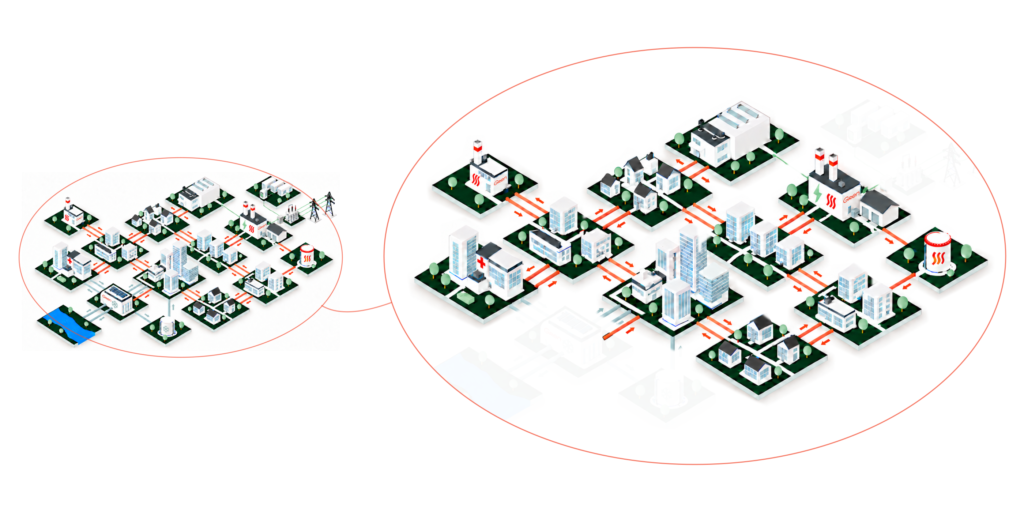
District heating connects multiple buildings to a shared heat supply through insulated underground pipes. Heated water carries energy to connected properties, providing space heating and hot water.
From neighbouring buildings to entire districts, a network brings heat sources and customers together. Depending on the location, it can draw on heating plants, combined heat and power plants, heat pumps and recovered industrial heat, and use thermal storage to balance heat production with the changing needs of connected buildings.
Connecting homes, businesses and communities
Every building has its own rhythm, from the morning rush at home to a full day at school or work. Heat supply needs to fit that everyday use, as well as the plans taking shape around it.
We work with property owners, businesses, developers and municipalities to assess how district heating fits their needs and plans. Whether connecting a new development, renovating a building or preparing it for a new use, we help clarify connection options, costs and service responsibilities so customers can make informed decisions about their heat supply.
Homes and housing associations
Heating and hot water for everyday comfort in apartment buildings and houses within reach of the network.
Businesses and industry
Heat for the places where business happens, from offices, shops and hotels to industrial premises.
Public buildings
Heating and hot water for schools, hospitals, sports facilities and other places at the heart of community life.
Developers and municipalities
Heat supply considered from the start, alongside plans for new buildings, neighbourhoods and local infrastructure.
What district heating brings to your building
When district heating replaces your own fuel-fired boiler, purchasing, storing and handling fuel for that heating supply becomes one less responsibility to manage.
A connection can remove the need for a dedicated boiler installation, fuel storage and chimney, giving building designers more options. Space is still needed for the heat substation and internal heating equipment.
The building’s controls allow heating and hot-water settings to be adjusted to suit its use and requirements, within the capabilities of the installed system.
Different heat sources, reserve capacity and heat storage can work together to help manage changing demand and maintenance. New technologies can be introduced over time where the local network allows.
Our local teams bring practical knowledge of the infrastructure and the communities it serves. They operate and maintain Gren’s production and network assets and help customers with connection and heat-supply questions. Responsibilities for equipment inside the building are set out in the service agreement.
Energy on Clyde with Glasgow
We are working with Glasgow to develop secure energy in the city that will benefit local businesses, people, and the community.
Currently just 2% of the UK’s heat is supplied by district heating networks. With an estimated 50% of buildings in the UK located in areas of suitable density for heat networks, the system has the potential to have a far greater impact.
Want to know more about affordable energy in Glasgow?

Impact in Latvia – innovating district heating
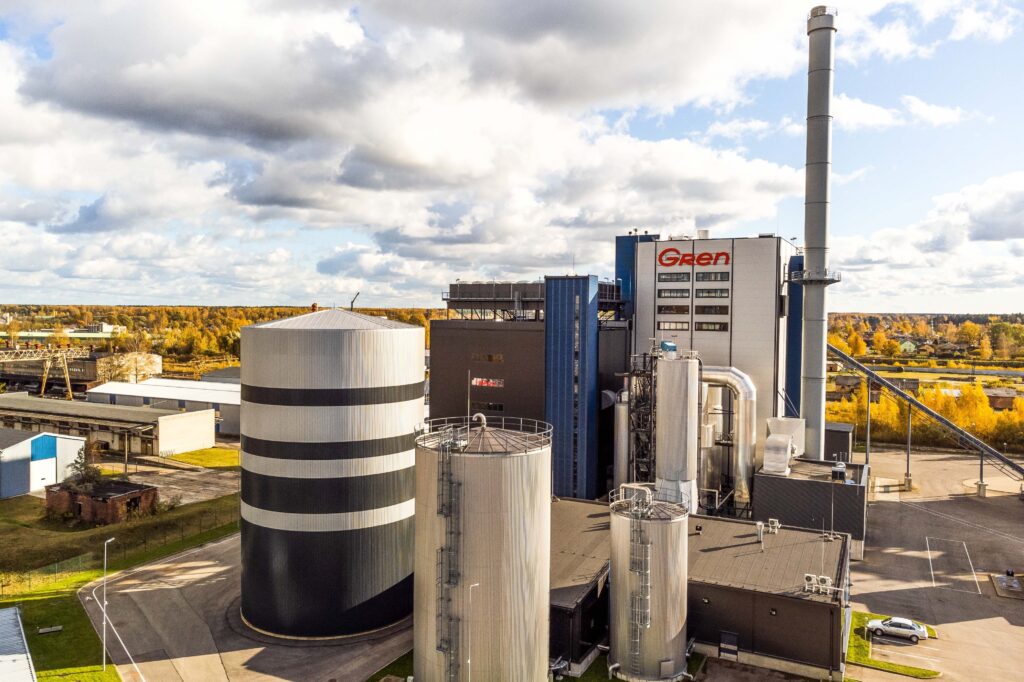
Gren’s combined heat and power plant in Jelgava uses local energy resources – mostly wood chips – to provide district heating to customers.
The largest plant of its kind in Latvia, the facility has improved the overall efficiency and security of district heating, reducing CO2 emissions from heat production by 90%.